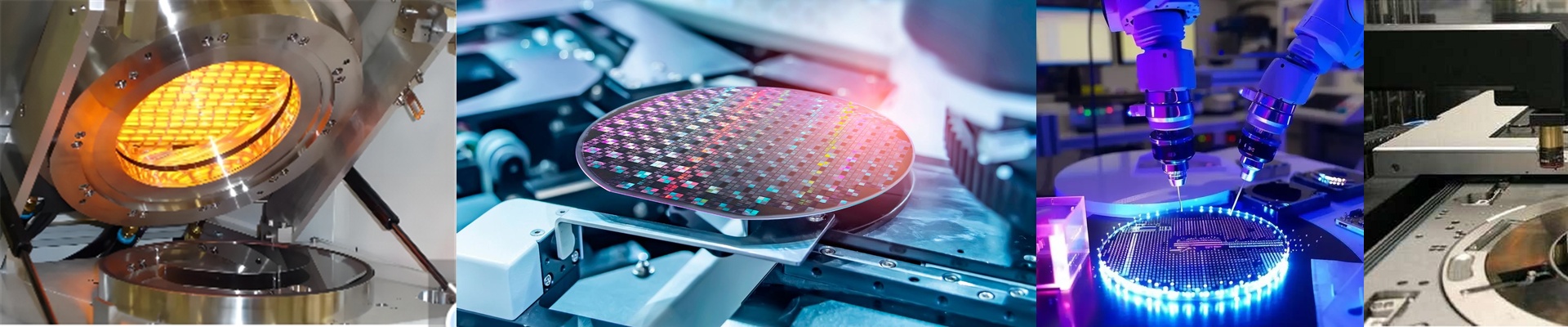

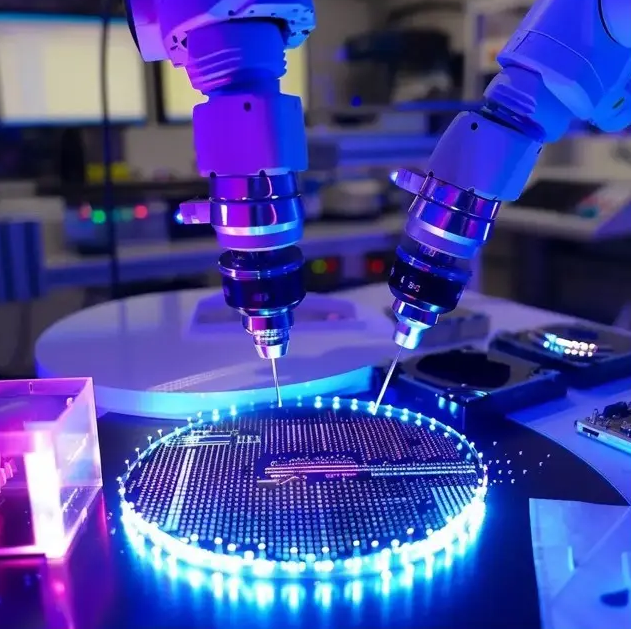
On the fab floor, photoresist bake profiles come down to one thing: lamp array stability. If your soft bake drifts even 0.5°C, CD control slips. Let hard bake wander 1.0°C and you’ll see scumming and residue. We built an SCR power regulator for the lamp so you can hold those windows—steady, shift after shift. What matters, technically The regulator uses a silicon-controlled rectifier topology with closed-loop current sensing. You get 0.1% power resolution and ±0.1°C steady-state temperature uniformity across the lamp envelope. It supports halogen, quartz, short-wave, medium-wave, and carbon-fiber/NIR lamps, from 24 V to 480 V, and it comes with standard 2-wire and 4-wire interfaces so you can drop it straight into wafer track bake plates and cure tools. Zero-particle construction and Class 1–100 cleanroom compatibility keep particle counts flat during bake/cure cycles. Here’s why it fits lithography and photoresist processing: you have to hit repeatable bake temperatures to keep CDs on target and scrap off the line. This regulator locks down lamp output, so your thermal budget stays in spec. The payoff is a tighter process window and fewer rework lots. And you’ll notice it on the energy draw, too. The controller avoids overshoot and holds setpoint without cycling, so consumption drops. We’ve seen units run 5,000+ hours with less than 5% output drop—fewer lamp swaps and PMs you can plan around. A couple of practical notes. The unit is engineered as a verified equivalent to international semiconductor equipment standards, but the wiring path isn’t the same as legacy mechanical contactors. Expect a quick commissioning step to match thermal mass and tune PID for your lamp and bake plate combo. Do yourself a favor and run a dedicated ground path with shielded cable. It keeps EMI out of sensitive metrology zones, where noise can wreck your day.